People turn to ChatGPT for researching, building tools, and—yes—even buying.
But many brands have no idea what’s happening inside ChatGPT. They’re showing up in thousands of responses without knowing which queries mention them, what’s being said, or how they stack up against the competition.
You can build basic vibe-coded tools to monitor your ChatGPT visibility, but tracking a small number of prompts is like trying to predict the weather by looking out of your window every once in a while.
The reality is AI prompts, responses, and citations shift constantly. You need thousands of data points to cut through the variance if you want to see actual trends.
There’s an easy fix. You can track your ChatGPT visibility across 13.5 million existing prompts inside Ahrefs Brand Radar database, and even set up your own custom queries to monitor what matters most.
Here are seven steps for using Brand Radar to measure, monitor, and improve your AI visibility.
How Hostinger gains visibility in AI and automates repetitive tasks”).
ROI and budget evaluation guides (“What ROI actually looks like for AI visibility tracking”).
And practical, platform-specific blogs (“Tracking brand visibility across AI Mode: Our approach”).
This will help us show up more often in high-purchase-intent queries in ChatGPT.
And it’s not just about “Mention” gaps. You can also track where your competitors are getting cited, but you aren’t.
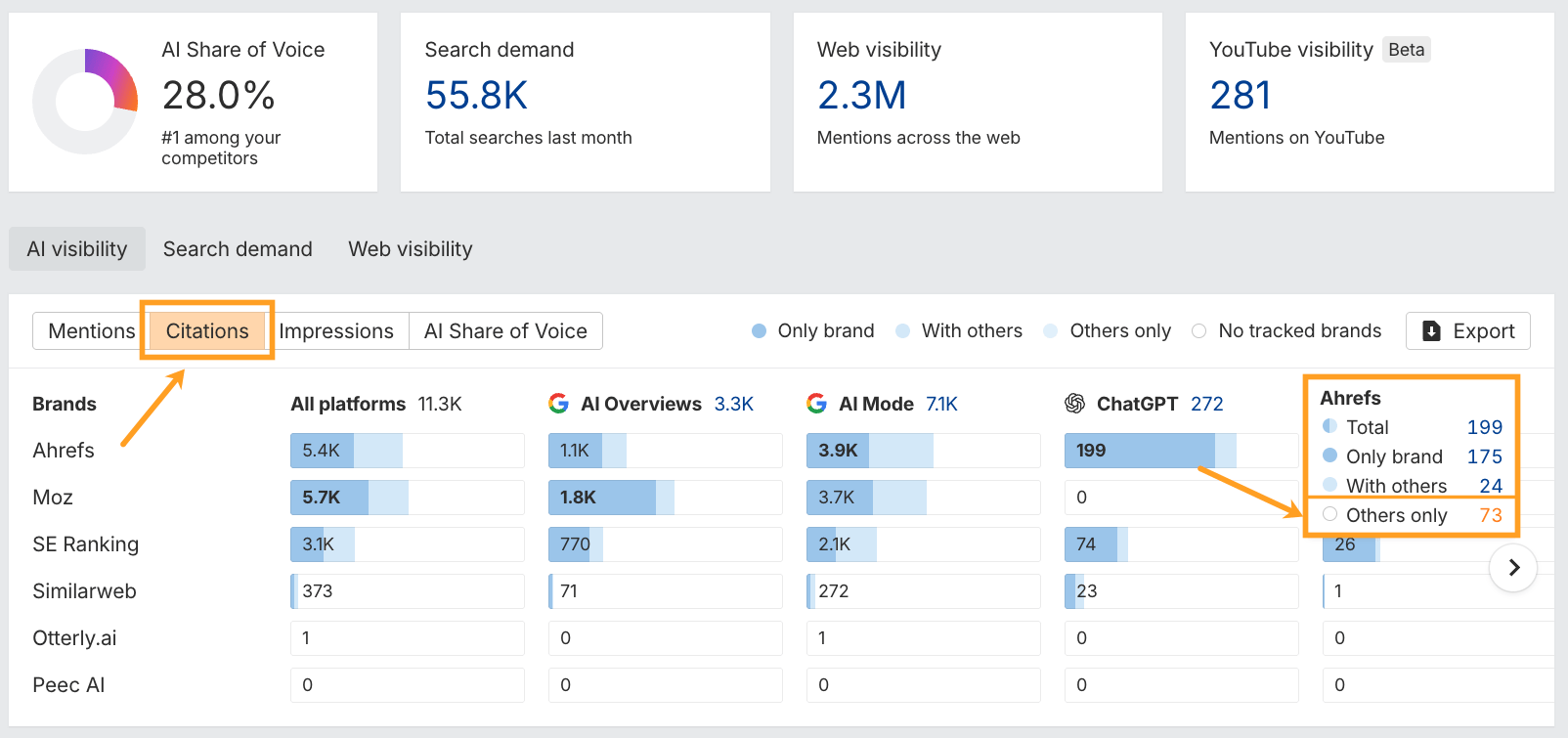
Just hit the Citations tab on the dashboard, hover, and click “Others only”.
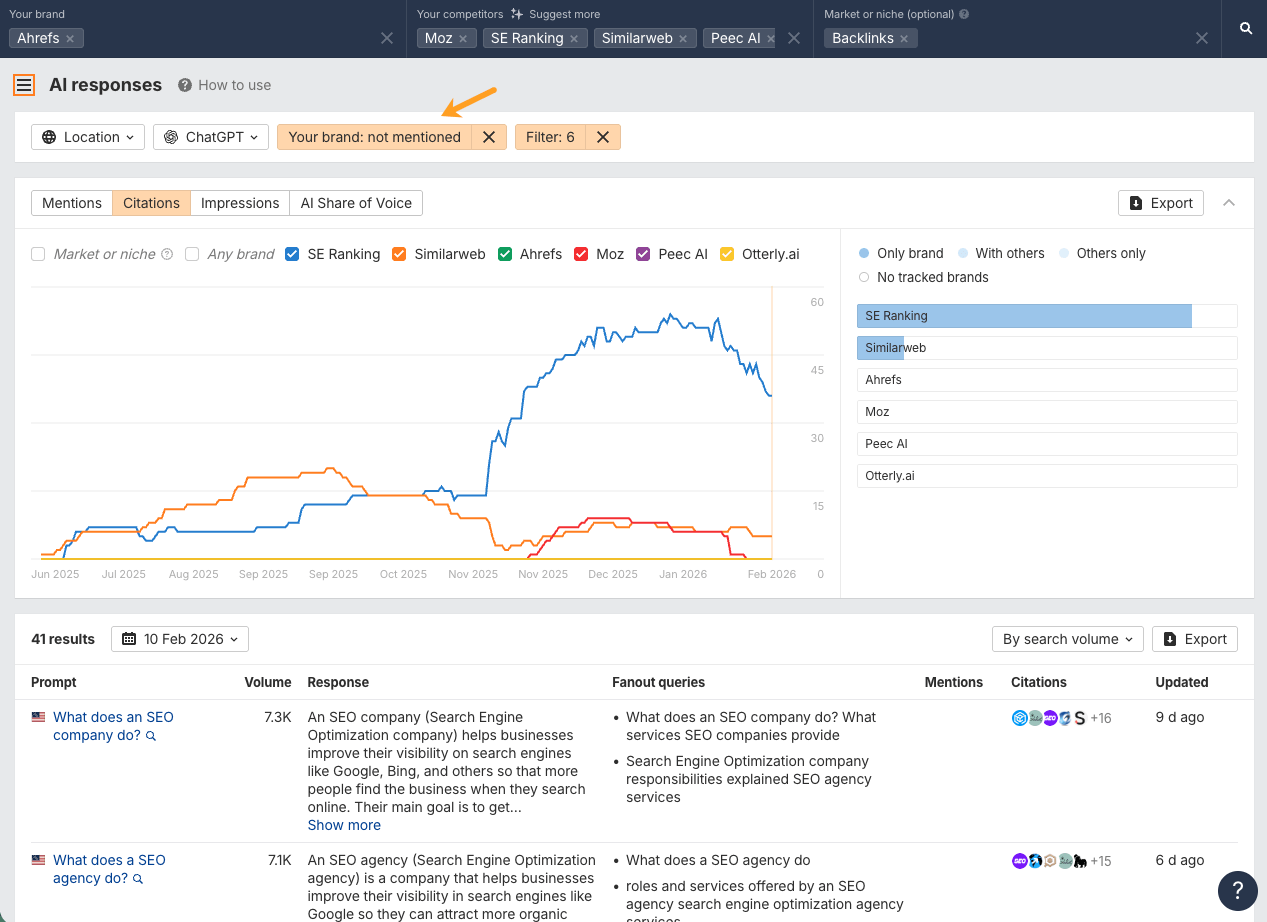
From there you’ll see ChatGPT responses where rival domains are cited, but you aren’t.
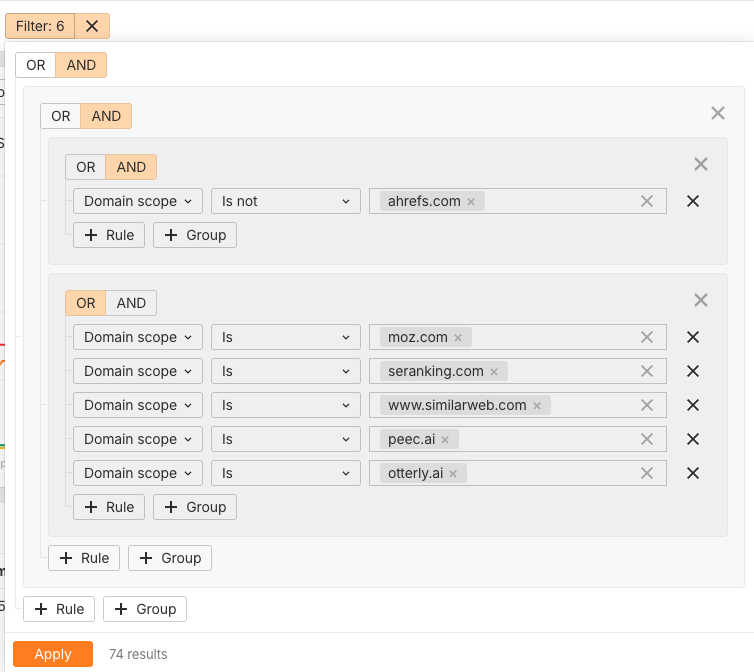
To get a complete picture of your missed visibility, add an extra filter so you’re looking at conversations where you’re neither cited nor mentioned.
Then grab ideas from competitors’ pages to enrich your own content—whether that’s adding in original data and statistics, improving formatting and structure, reducing time-to-insight, optimizing meta data and snippets, or building out your coverage across the topic on the whole.
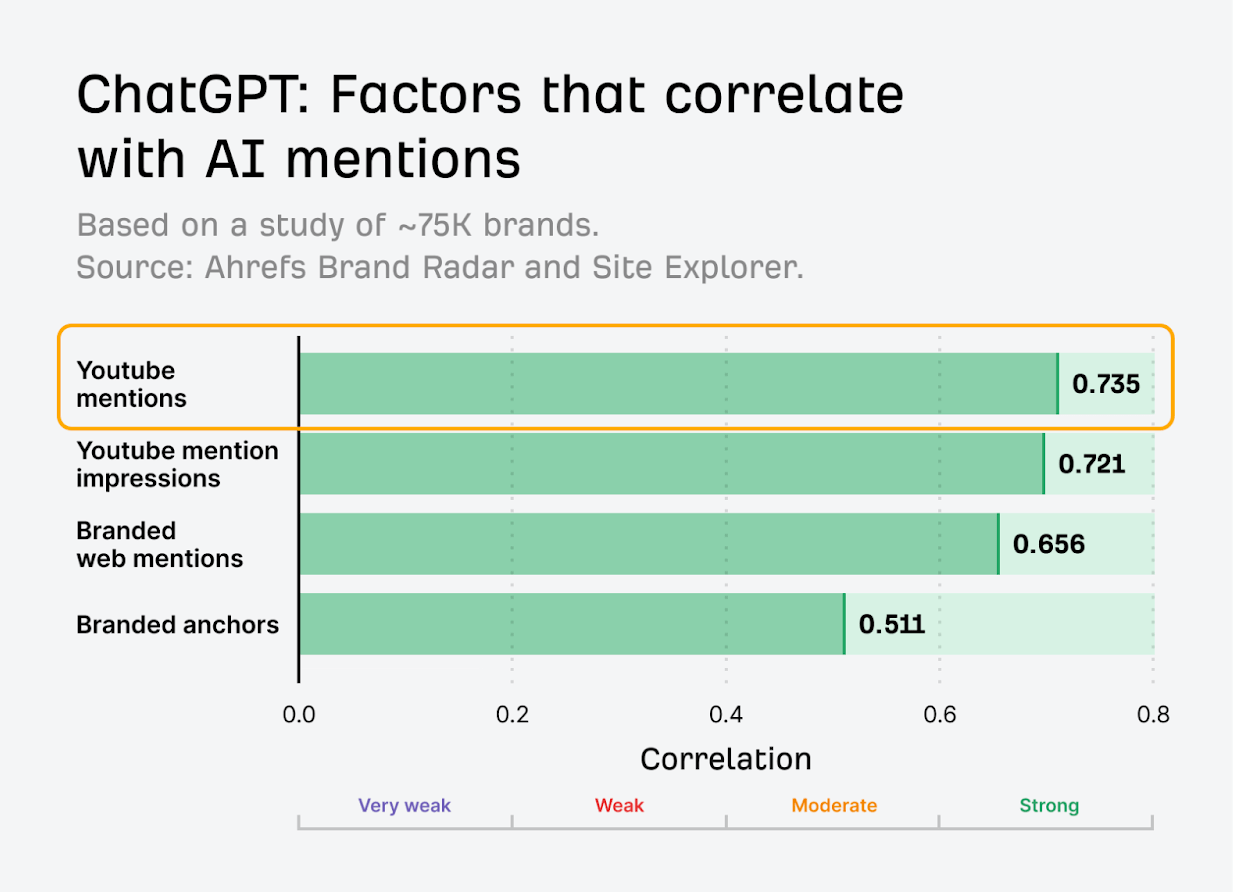
AI brand visibility factors.
Meaning that when creators make videos about your product, ChatGPT may use that content as source material for recommendations.
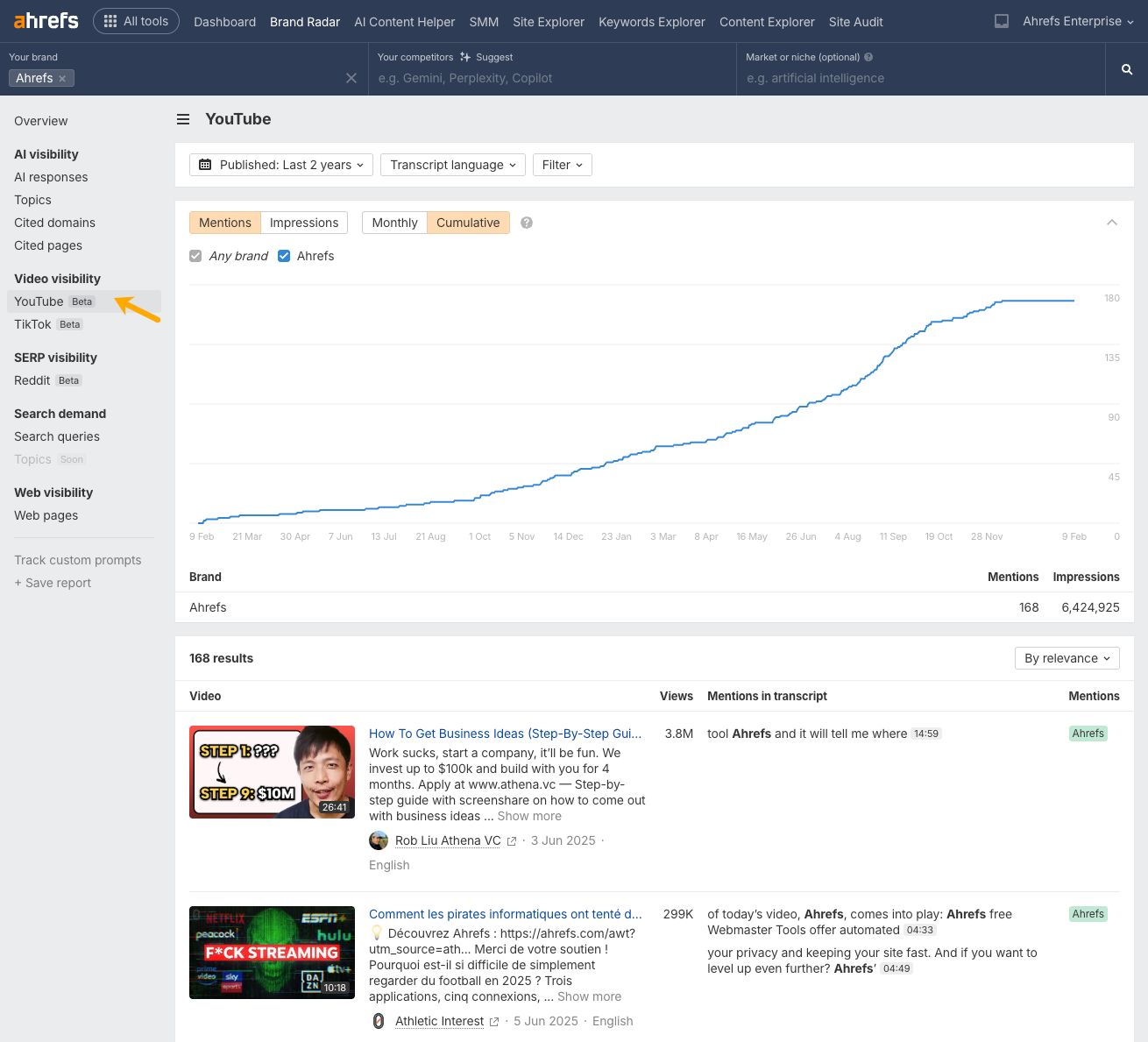
Click into Video visibility > YouTube to see videos mentioning your brand.
You can cross-reference this data against the Cited pages report to see which videos containing mentions of your brand are also informing ChatGPT answers.
Look for patterns in what topics are covered and which creators mention you—then it’s just a case of producing and sponsoring more of that content.
Check your web visibility
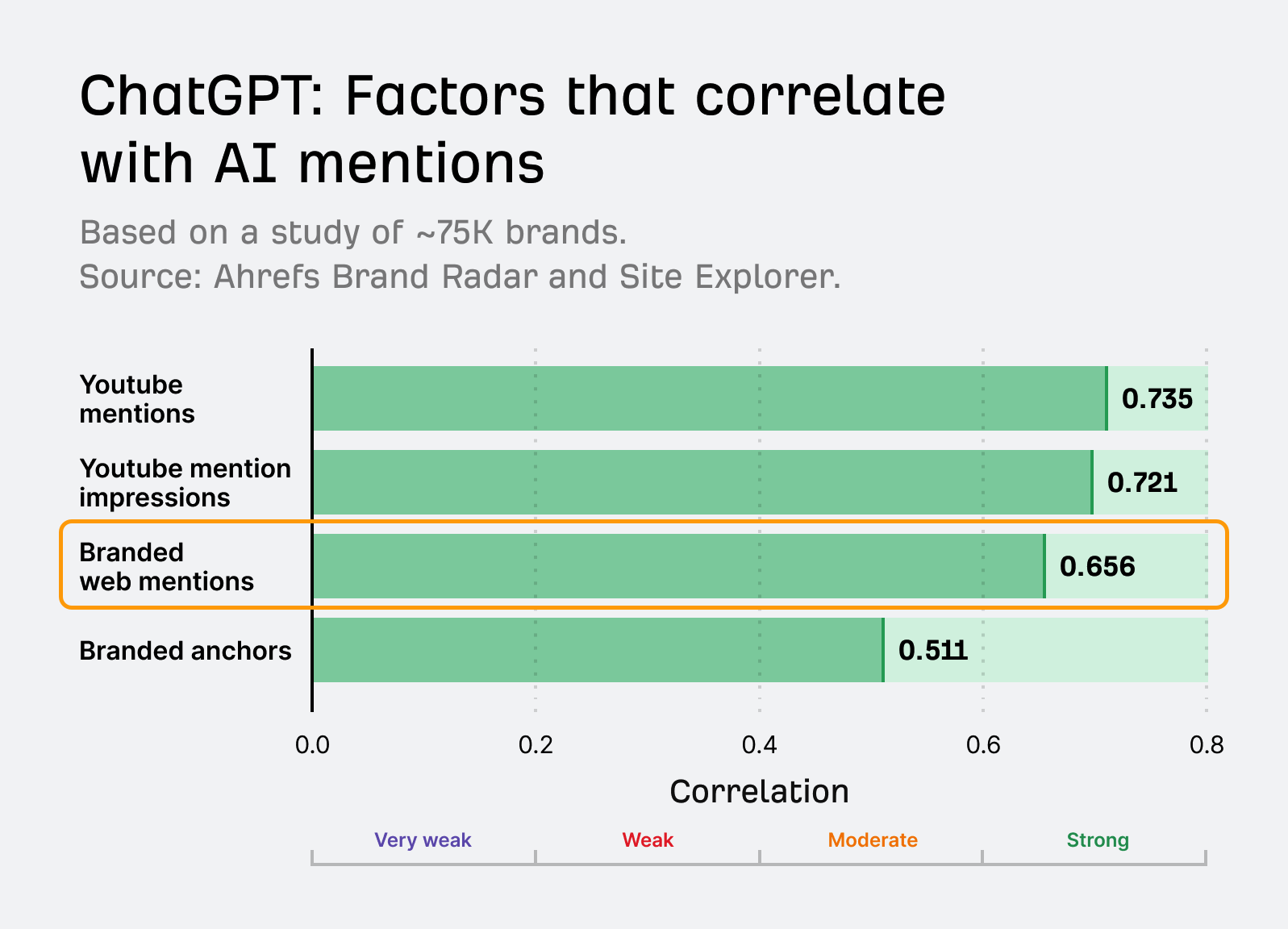
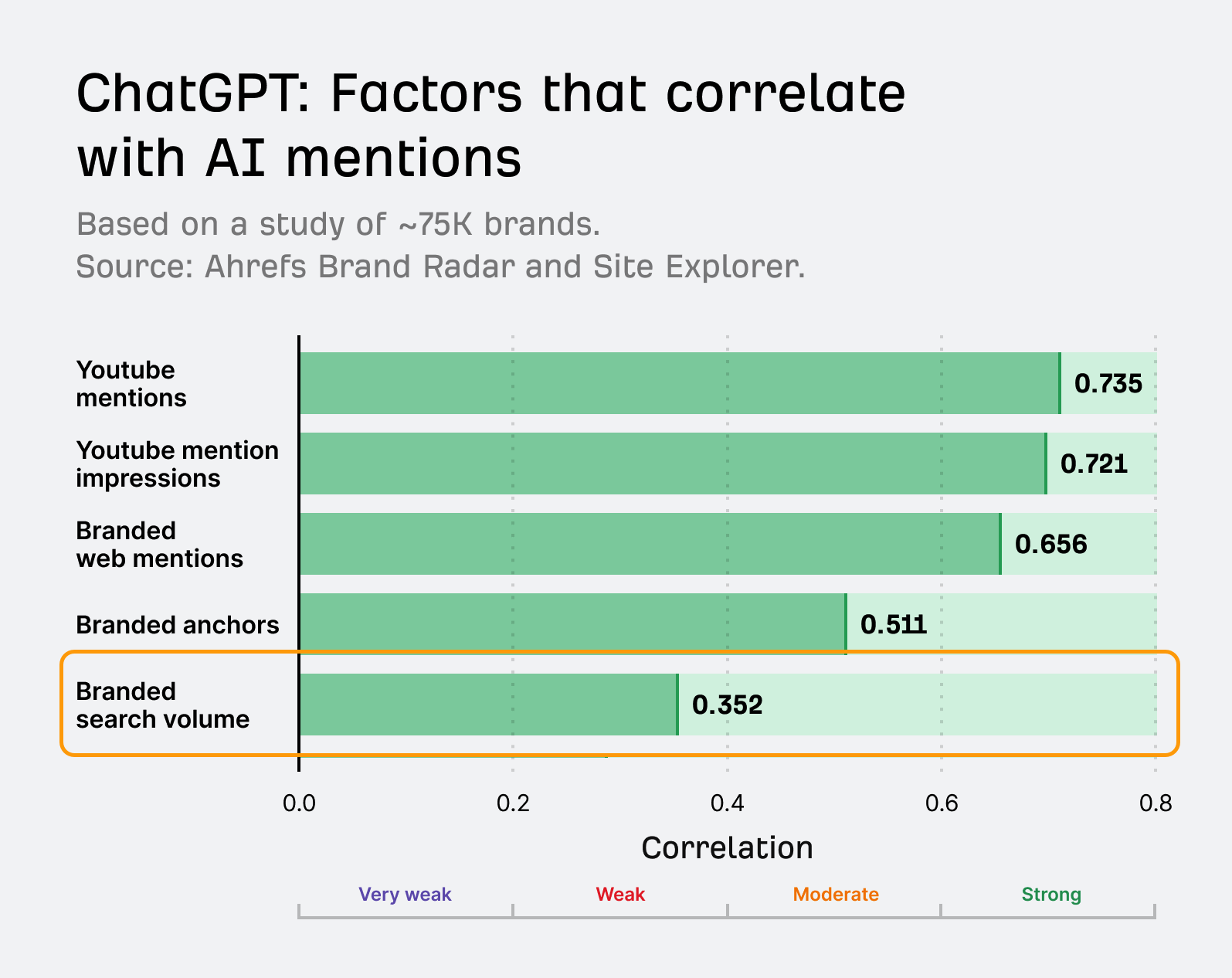
According to our own research of 75,000 brands, branded web mentions have one of the strongest correlations with visibility in ChatGPT.
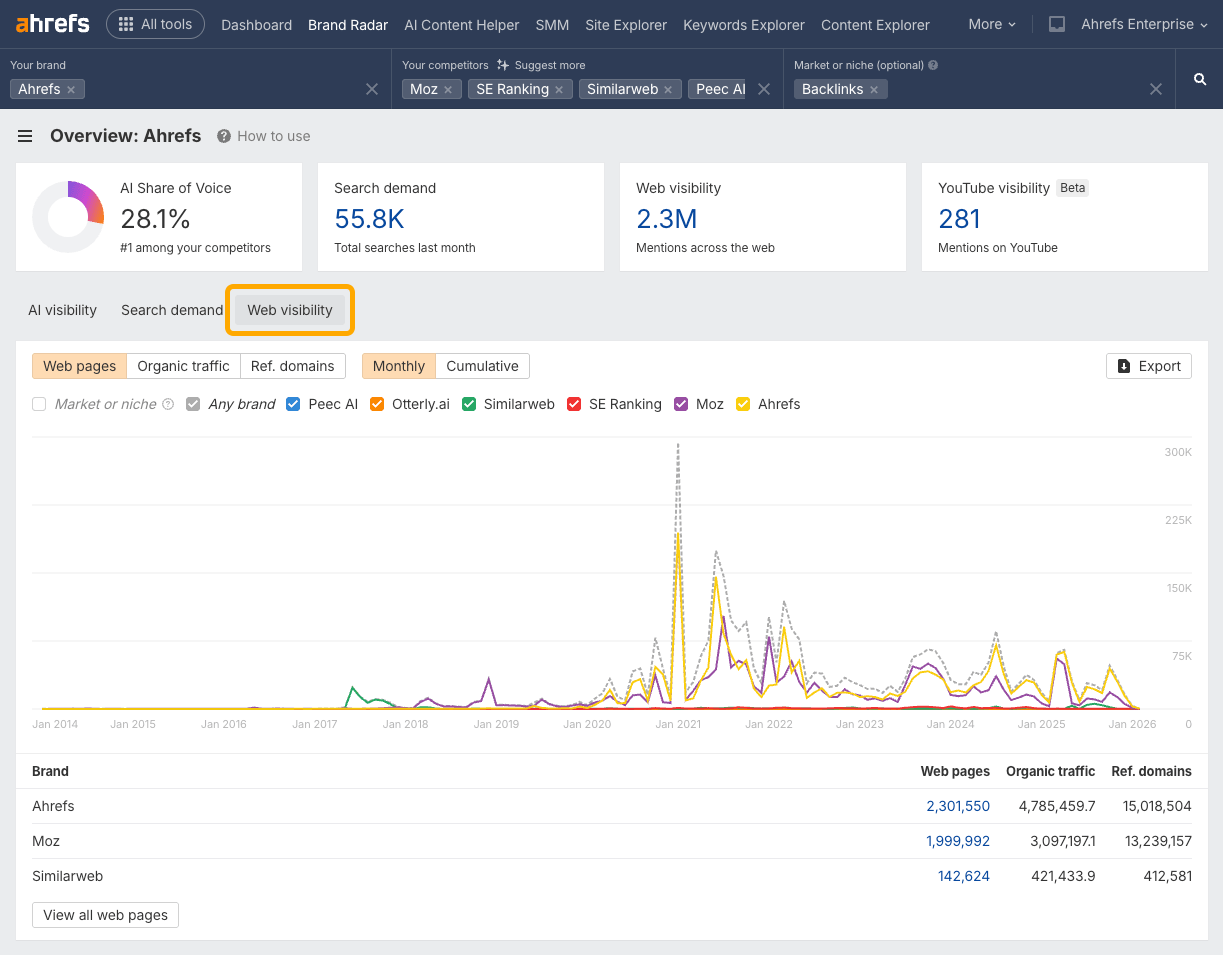
So, being able to see trends in both your web mentions and AI visibility can help you work out how your off-site efforts are impacting your ChatGPT performance.
Navigate to the Web visibility tab to view those trends, and see which exact pages mention your brand across the web.
There’s another easy way to spot when you’ve been mentioned by a page that’s cited in ChatGPT.
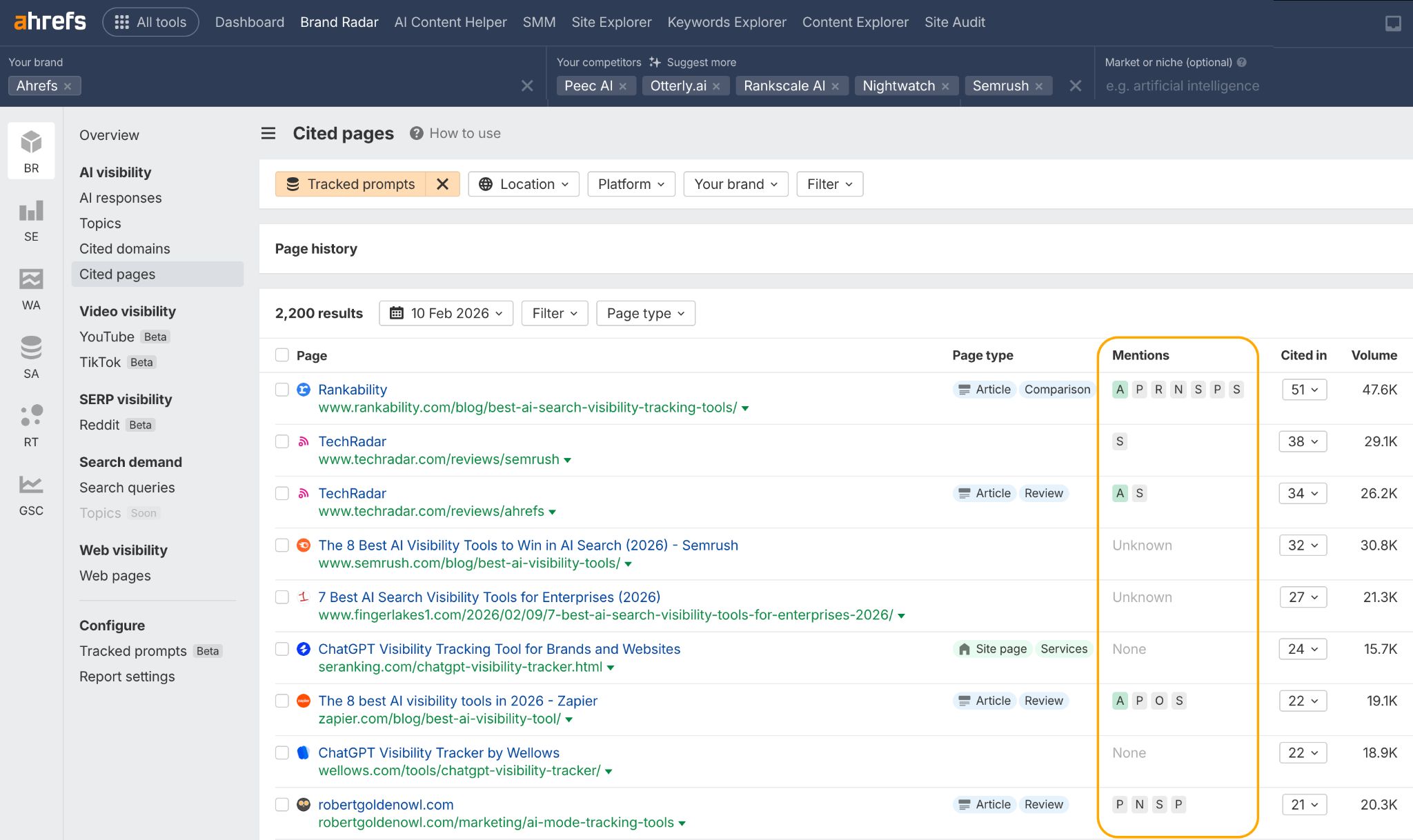
Just head to the Cited pages report and check out the “Mentions” column.
Whenever you spot your brand’s initials in green, it means that the URL in question has mentioned your brand name within the content of the page.
Tracking metrics like brand mentions can help prove how impactful your PR and brand awareness efforts are in driving ChatGPT visibility.
Track your search demand
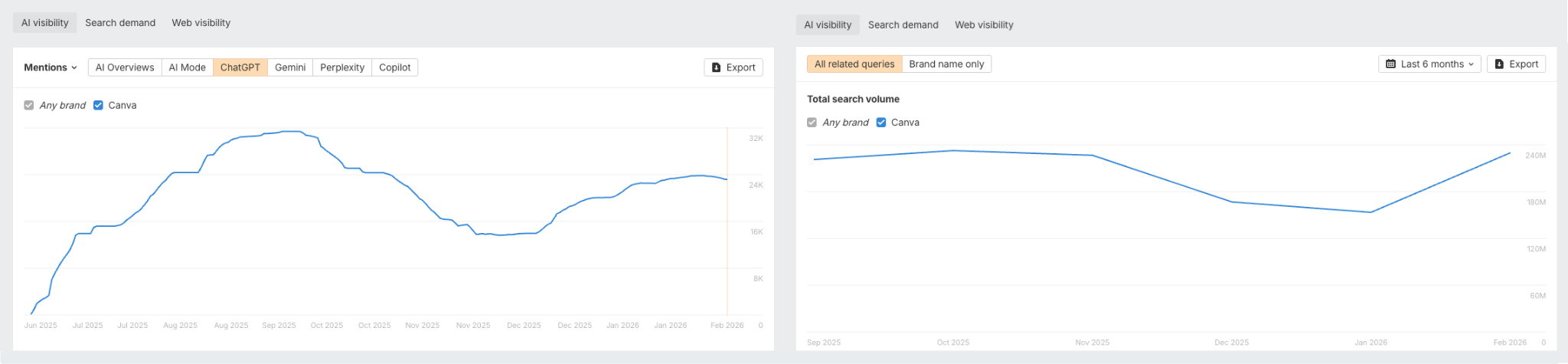
Rising search volume for your brand is often a leading indicator of ChatGPT growth.
For example, here’s Canva’s ChatGPT visibility and branded search volume side-by-side.
While search volume is not as strongly correlated as brand mentions, there is still a clear positive relationship.
If your brand is searched for more often, it’s more likely to appear in search results—and that visibility can increase the chances of it being grounded in ChatGPT answers.
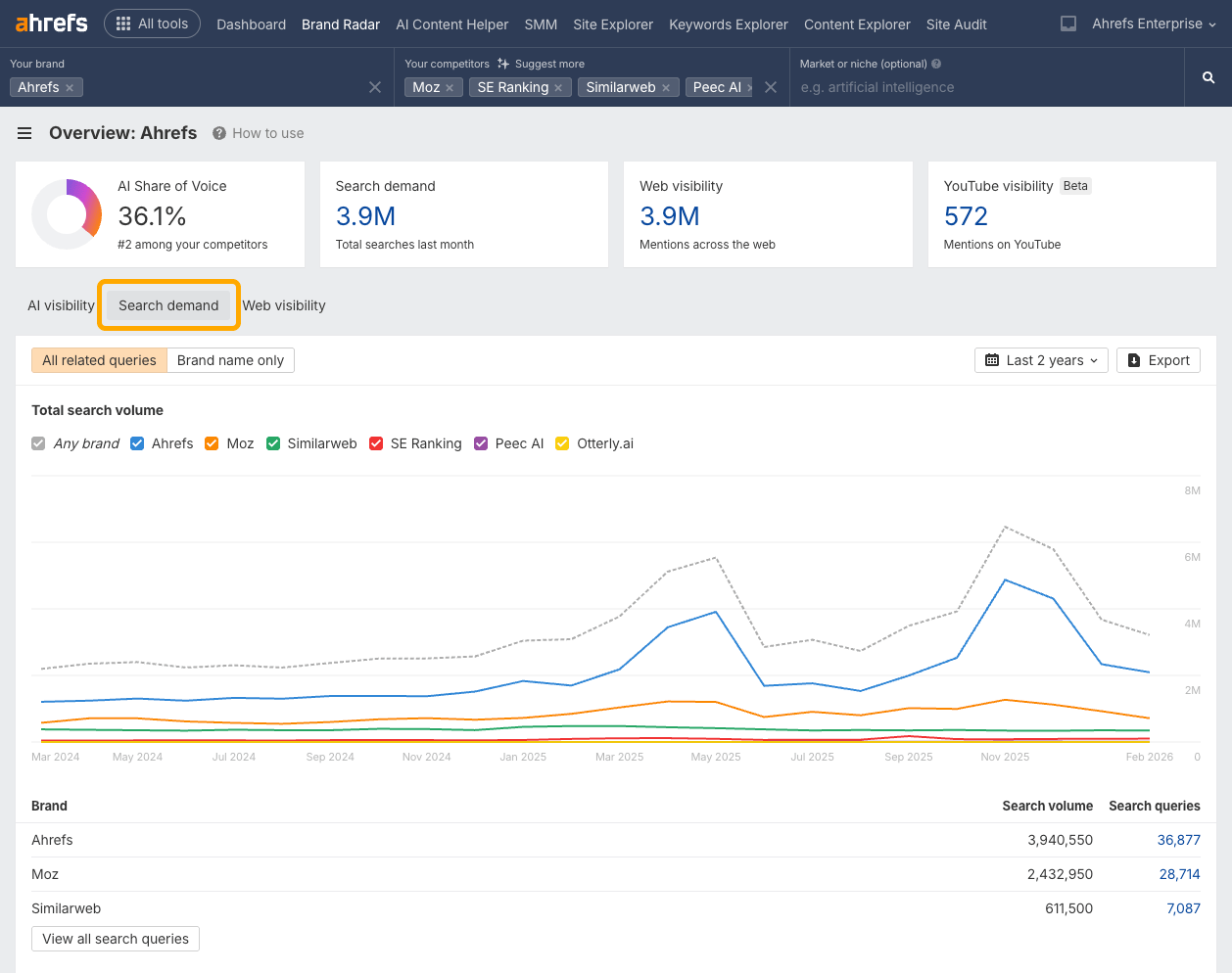
You can track your branded search demand trends and queries within Brand Radar in the Search demand tab.
Scan Reddit conversations
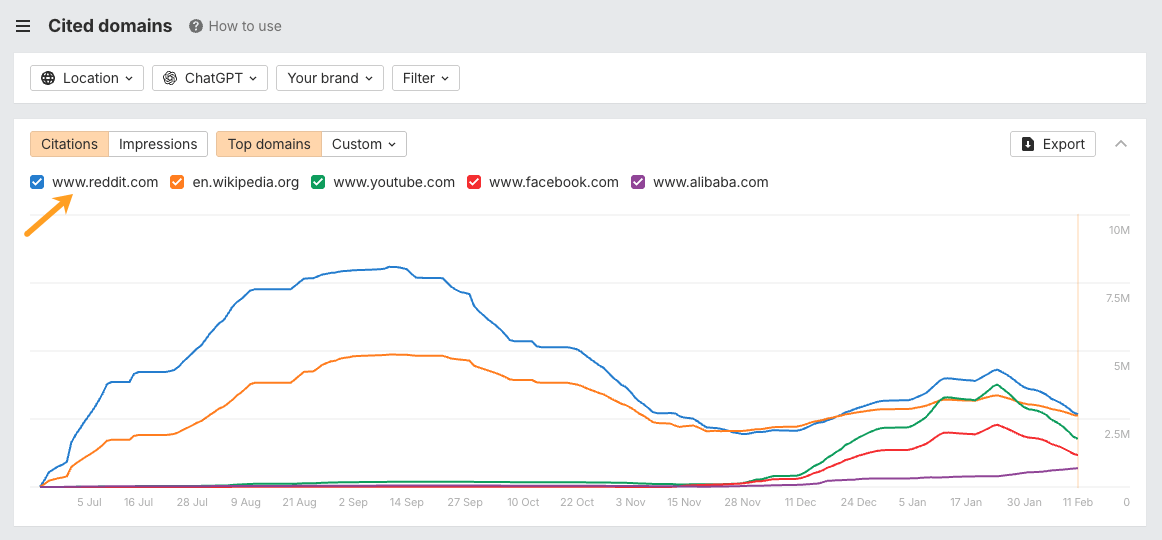
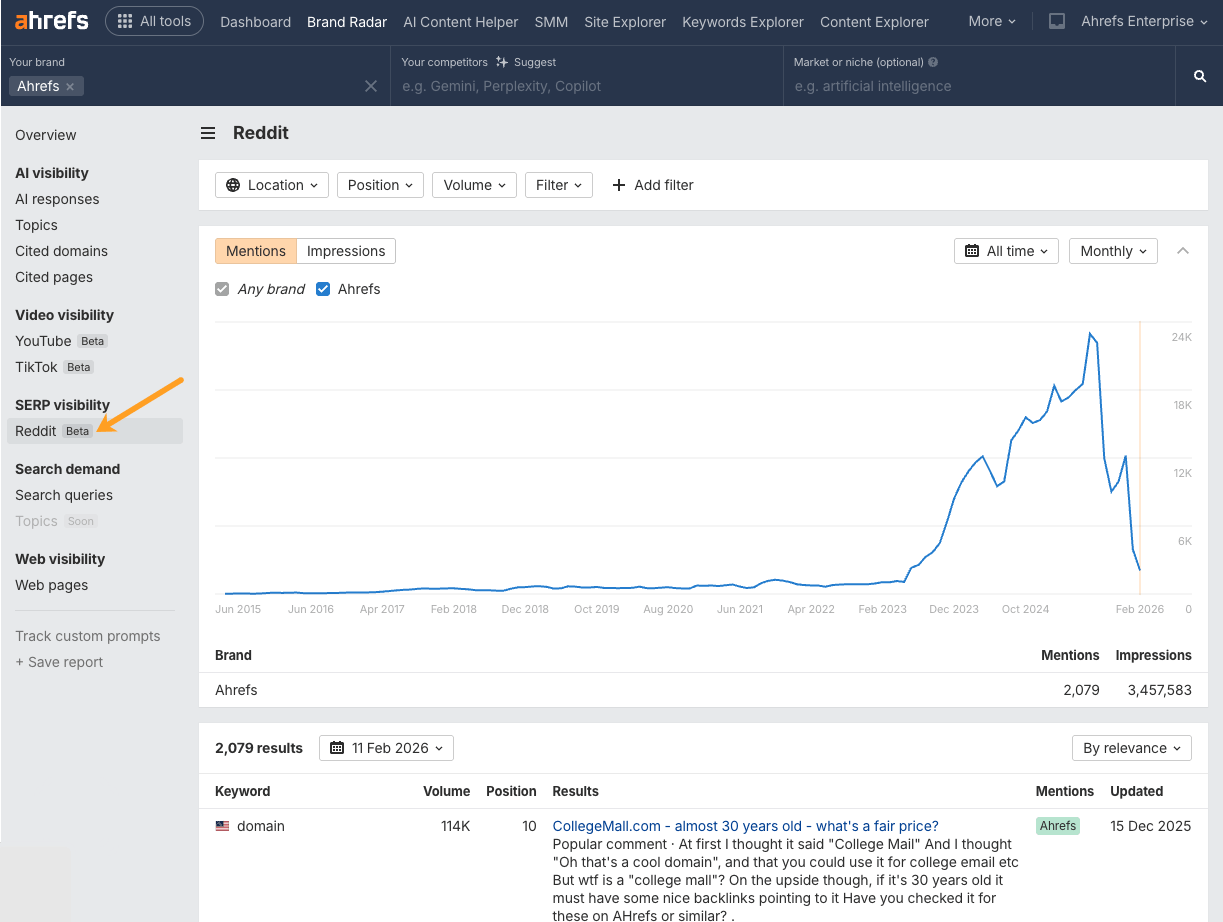
Reddit discussions are a goldmine for ChatGPT because they contain real user opinions and recommendations.
In fact, Reddit is ChatGPT’s #1 cited domain across 13.5M prompts, according to Brand Radar.
When someone asks “What’s the best SEO tool?” on Reddit and 15 people recommend Ahrefs, ChatGPT absorbs that consensus.
Navigate to SERP visibility > Reddit to see Reddit threads mentioning your brand.
Review high-traffic subreddits that mention your brand, gauge the sentiment of those discussions, and create a plan to address questions and guide the narrative without coming across as overly promotional.
Track TikTok mentions
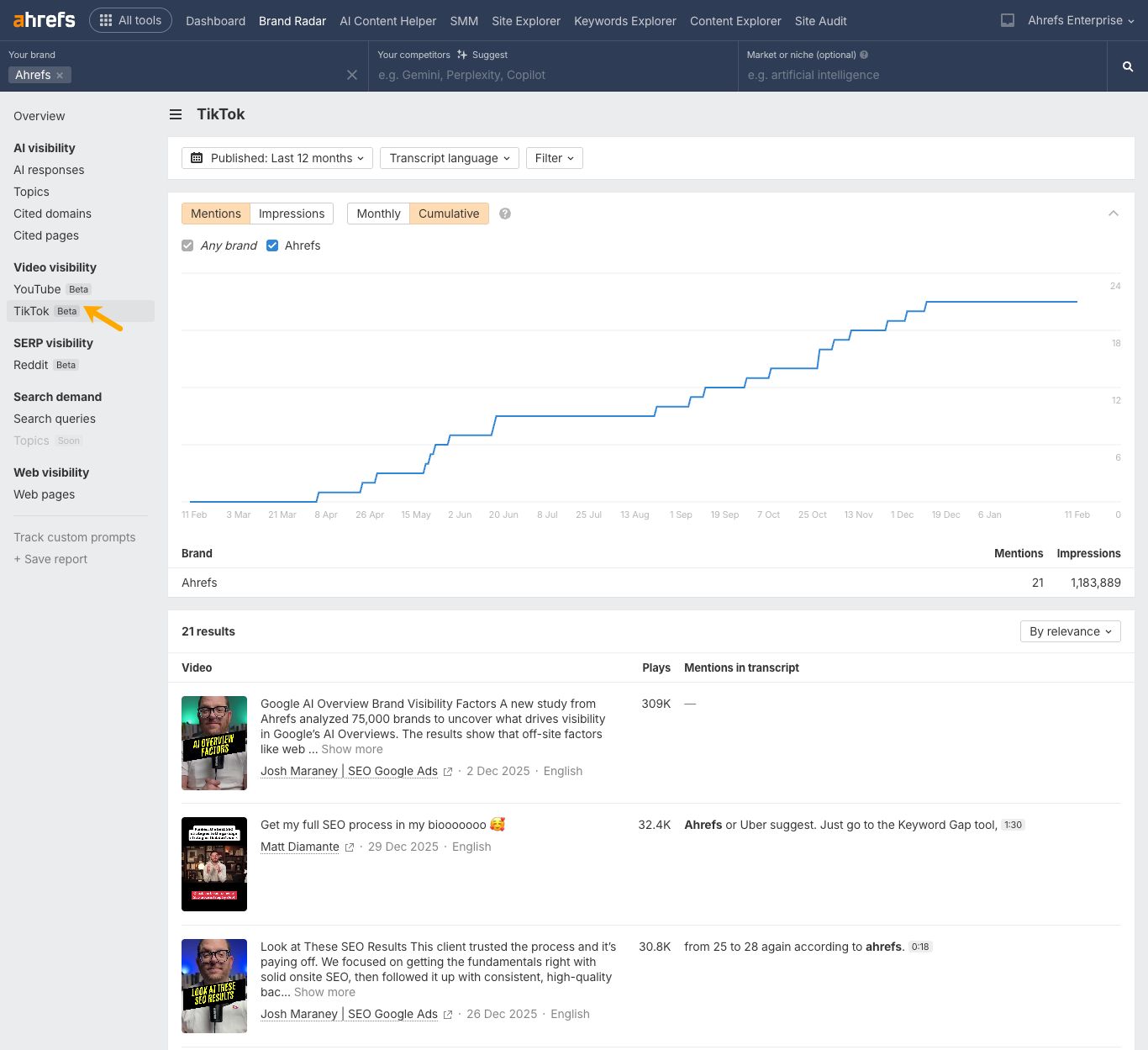
TikTok might seem unrelated to AI search, but it’s increasingly influential.
Videos explaining how to use your product or comparing you to competitors help establish your category positioning—which ChatGPT then reflects.
Go to Video visibility > TikTok to see TikTok videos featuring your brand.
custom prompt tracking in Brand Radar lets you do exactly that. You can track the exact questions your customers are asking, whether that’s “best CRM for construction companies” or “is [your product] worth it in 2026.”
The key is grouping related queries together and analyzing aggregate patterns. This gives you a reliable directional view of your brand’s performance.
For example, you can cluster your custom prompts by intent, funnel stage, or product category.
Here are some more ideas:
Branded queries: To fact check and spot misinformation patterns. (e.g. “Is Ahrefs data accurate?”)
Bottom of funnel queries: To understand how the AI recommends your brand during purchase decisions. (e.g. “Best SEO tool for a small agency?”)
Mid funnel queries: To understand your ability to educate AI audiences. (e.g. “What is keyword difficulty and how is it calculated?”)
Feature based queries: To zero-in on conversations surrounding your focus products, and understand how better to position and promote them. (e.g. “What can you do with Ahrefs Content Gap tool?”)
Campaign related queries: To assess the impact of your PR and marketing efforts on ChatGPT visibility (“What is Ahrefs’ AI brand visibility correlation study about?”).
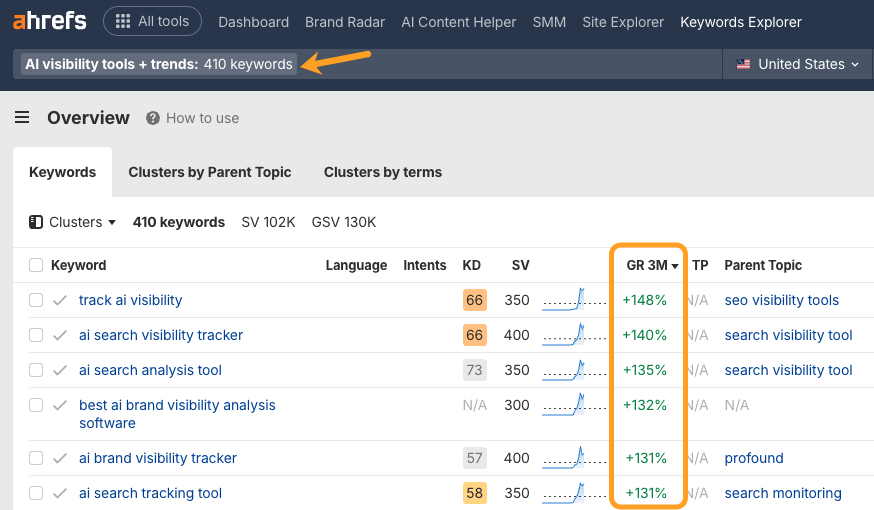
As another example, I’ve set up a group of 100+ BOFU custom prompts pertaining to the topic of “AI visibility tools”, since that’s actively where we’re trying to grow our brand awareness right now.
I did this by expanding hundreds of trending AI visibility keywords (discovered in Ahrefs Keywords Explorer) into fuller “prompt-like” queries.
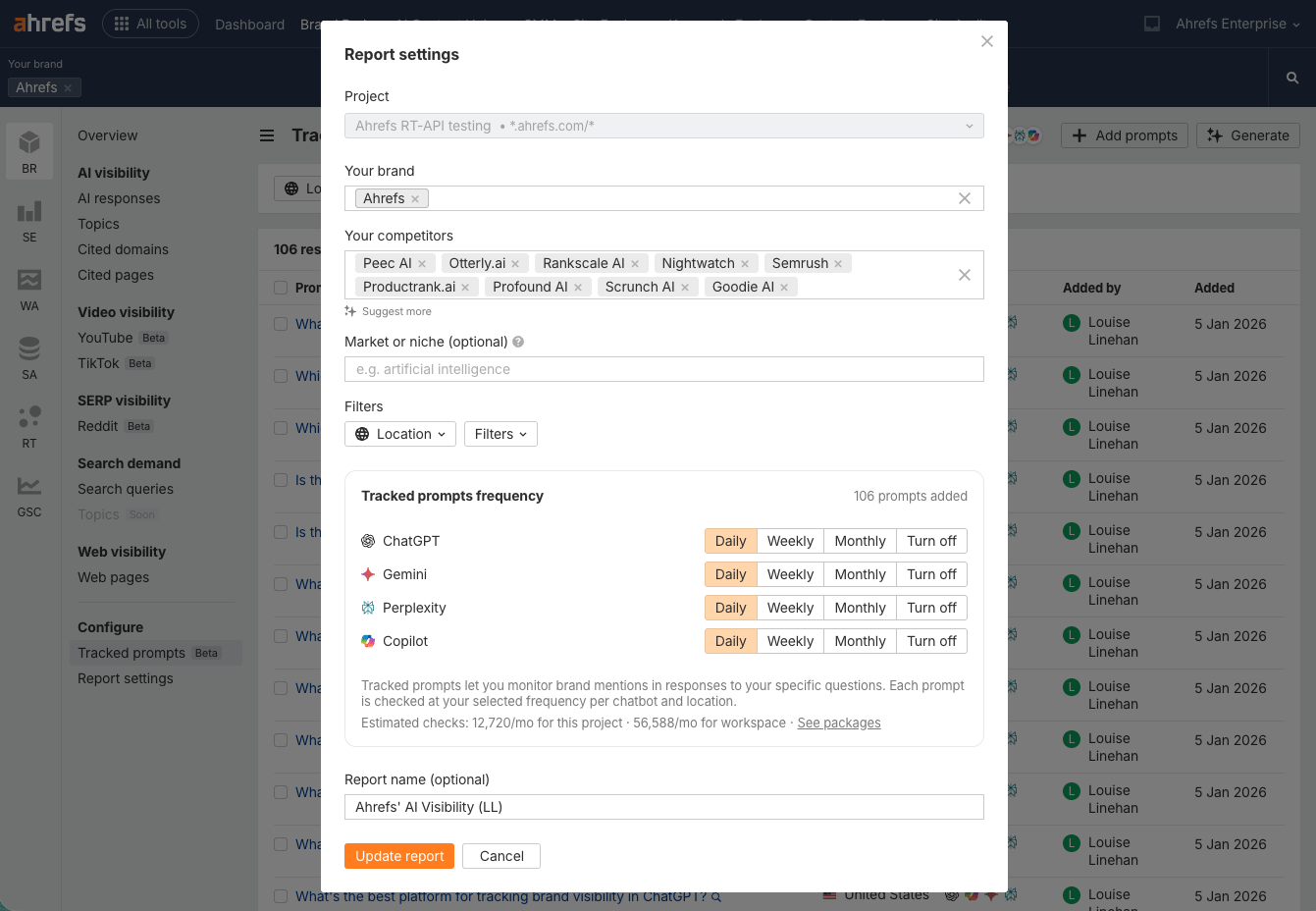
To monitor your own custom ChatGPT prompts, just select a Project and choose your monitoring schedule—daily for high-priority terms, weekly for mid-priority queries, or monthly for brand sentiment.
Then you can select which platforms, locations, and competitors to monitor.
And finally, track your progress.
Think: which brands are mentioned most frequently on average, which of your own pages are consistently cited, and how does your visibility trend over time?
This gives you actionable insights without getting lost in response volatility.
Brand Radar—this is your baseline for measuring your overall visibility in ChatGPT.
Set up comprehensive monitoring. Create custom prompt tracking for your most important queries (branded searches, bottom-funnel terms, and new product features) and schedule them to run daily, weekly, or monthly.
Track in context of other channels: Periodically monitor the channels that feed into AI visibility: YouTube mentions, Reddit conversations, web citations, and branded search demand.
Review and act on gaps. Every month, run a competitive gap analysis to find topics where competitors appear but you don’t. Study the fan-out queries and cited pages in those responses, then create or update content clusters that address both the main prompts and their related subtopics.
Track the impact. Watch how your AI SoV trends upward—both at the category and database level—as you publish optimized content, earn citations across high-authority pages, and build presence elsewhere online—proving that your cross-channel efforts are translating into ChatGPT visibility.
If you’re curious where you stand, get started with Brand Radar.