Google’s AI Mode generates responses that are 4x longer than AI Overviews (on average). When we first noticed this, the natural assumption was that AI Mode simply expands on the same information, taking AI Overview’s concise answer and adding more detail from the same sources.
But after analyzing 730,000 response pairs, we found something unexpected: AI Mode and AI Overviews reach very similar conclusions (86% semantic similarity) while citing different sources (only 13.7% citation overlap).
This matters because it suggests these aren’t just a “short version” and “long version” of the same answer. They’re two distinct systems that happen to converge on similar conclusions through different paths.
For marketers and SEO professionals, this raises critical questions:
- If your brand is cited in AI Overviews, will it appear in AI Mode too?
- Do you need separate optimization strategies for each?
- What does it mean when two AI systems agree on what to say but not where they found it?
We analyzed citation patterns, content similarity, and entity mentions across hundreds of thousands of queries to find out. Here’s what we discovered.
We measured citation overlap by identifying how many URLs appeared in both AI Mode and AI Overview responses for the same query. We also tracked domain preferences to see which websites each platform cited most frequently.
For content similarity, we used two metrics: Jaccard similarity to measure word-level overlap (calculated as unique words in common divided by all unique words), and cosine similarity to measure semantic overlap on a scale from 0 (completely different) to 1 (identical meaning).
We also analyzed entity overlap by counting how many people, organizations, and brands were mentioned in both responses.
Sidenote.
This analysis compares single generations of AI Mode and AI Overview responses. Our previous research showed that 45% of AI Overview citations change between generations. This means the citation pools available to each system may overlap more than our single-snapshot comparison suggests. However, the low overlap we observed (13.7%) indicates that even when multiple sources could support an answer, AI Mode and AI Overviews often select different ones in practice.
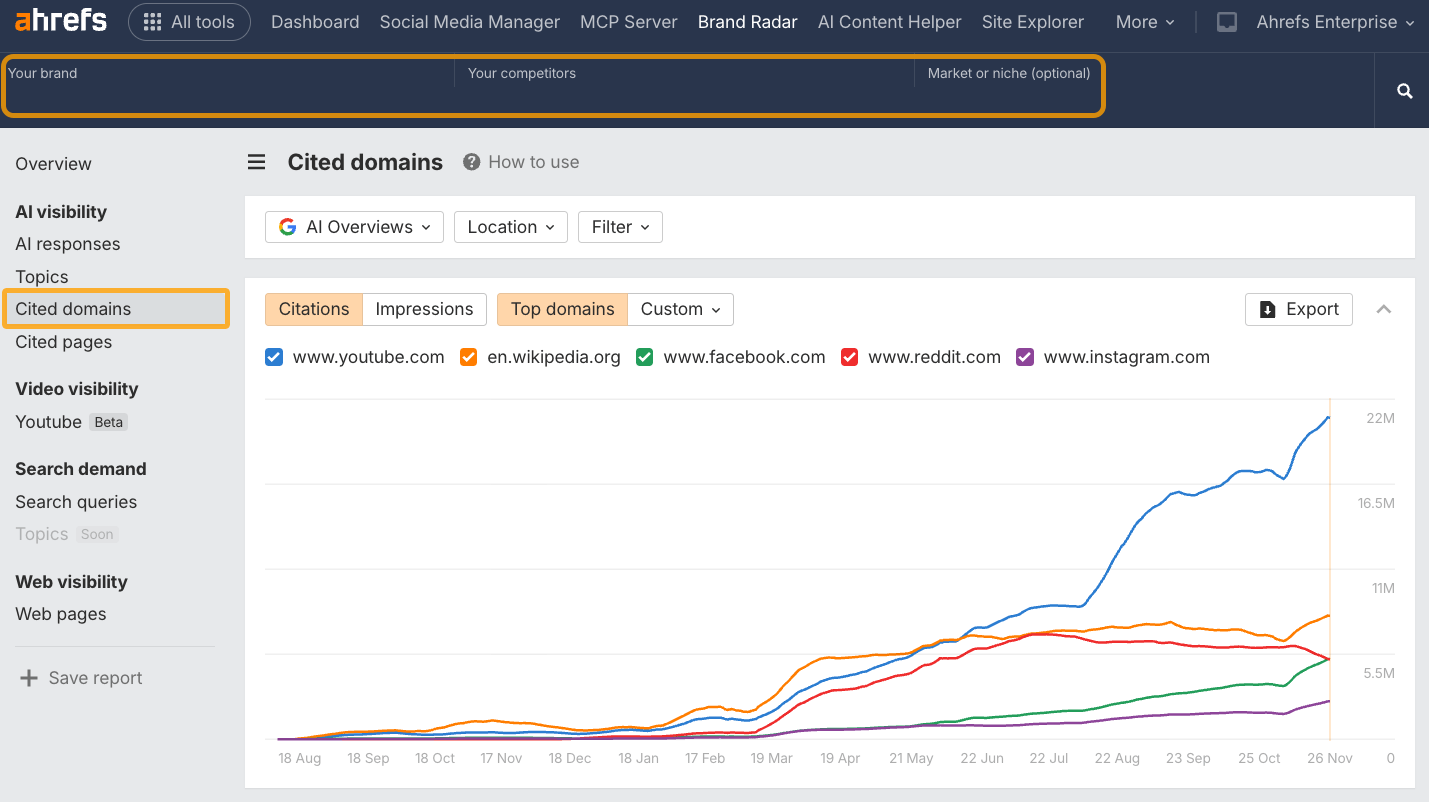
Filter by AI Overview and AI Mode separately to see their preferred sources.

You can also filter for your target topics or specific brands if you want to analyze a more specific segment of the data. Check out our guide to the best filter combinations to try.
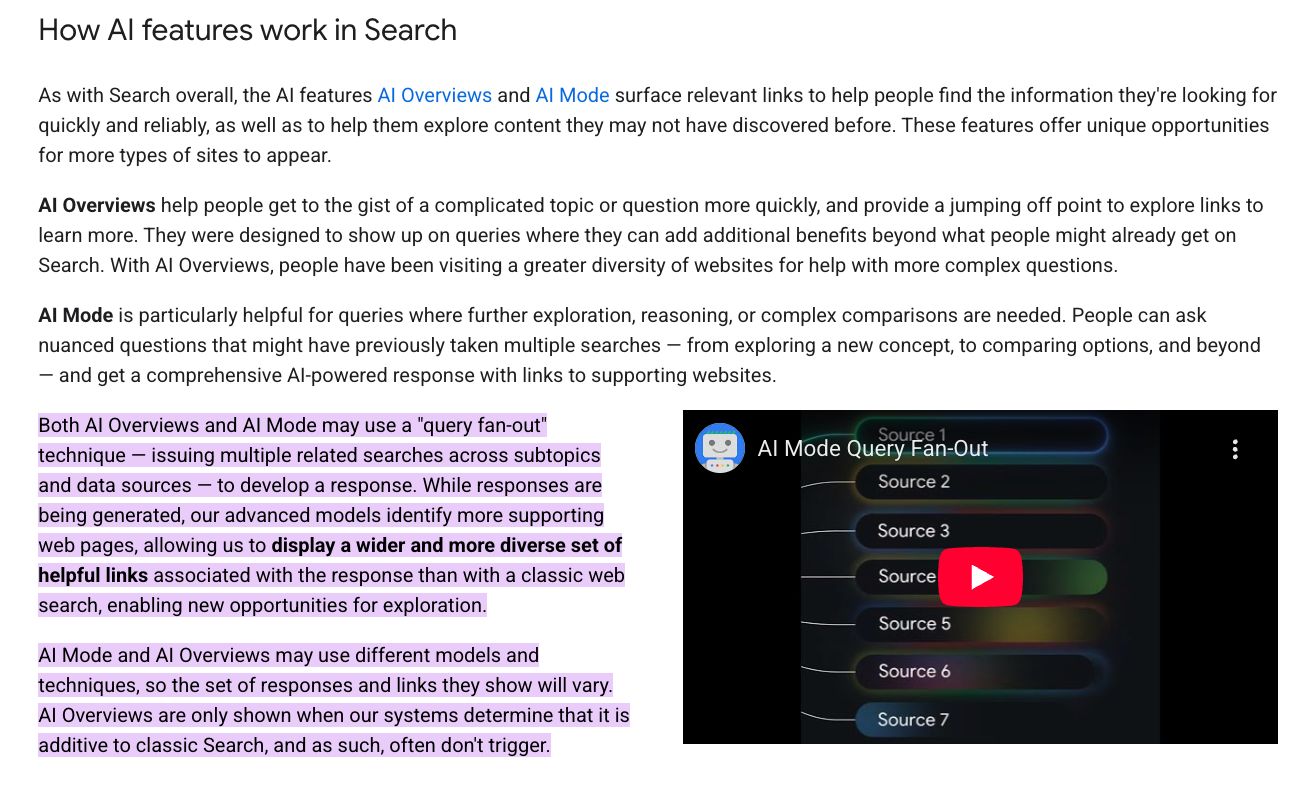
Query fan-out is a process that runs multiple related searches to find supporting content while responses are being generated. Since AI Mode and AI Overviews use different models and techniques, they can easily cite different sources even when reaching similar conclusions.
This explains why they agree on what to say while disagreeing on where they found it.
Think of it like two experts answering the same question.
They might use completely different words and reference different studies, but if they’re both knowledgeable about the topic, their answers will convey the same core information. That’s what’s happening here; the systems are drawing from a consistent understanding of each topic, even as they express it differently.
Similar Posts
How scammers steal iPhones
Try out Aura free for 14 days with this link: https://aura.com/jim How do thieves steal expensive…
Switch Embedded Teaming to replace the traditional NIC Teaming for Hyper-V
Today I tested a very nice feature available with Windows Server 2016, called Switch Embeddded Teaming…
vSphere 7 ESXi Upgrade
After upgrading vCenter, I now had to upgrade my single ESXi Lab host. I mounted the…
They want you to MISDIAL
This company in India take advantage of people mis-dialling telephone numbers. They will be unclear about…
My Session and Experience at VMware Explore India 2023
I had the privilege to present a topic at the prestigious event – VMware Explore India…
How to Access vSphere Replication 8
In this series of vSphere Replication Installation & Configuration, we have learned how to Install vSphere…


