Every AI marketing disaster you’ve seen—the cringeworthy fake influencers, the obviously robotic copy, the brands caught lying about AI use—happened because someone thought AI could replace strategy, creativity, or authenticity.
The examples in this article prove the opposite: AI’s value is removing grunt work and constraints, not replacing the humans who understand your market, your brand, and your customers.
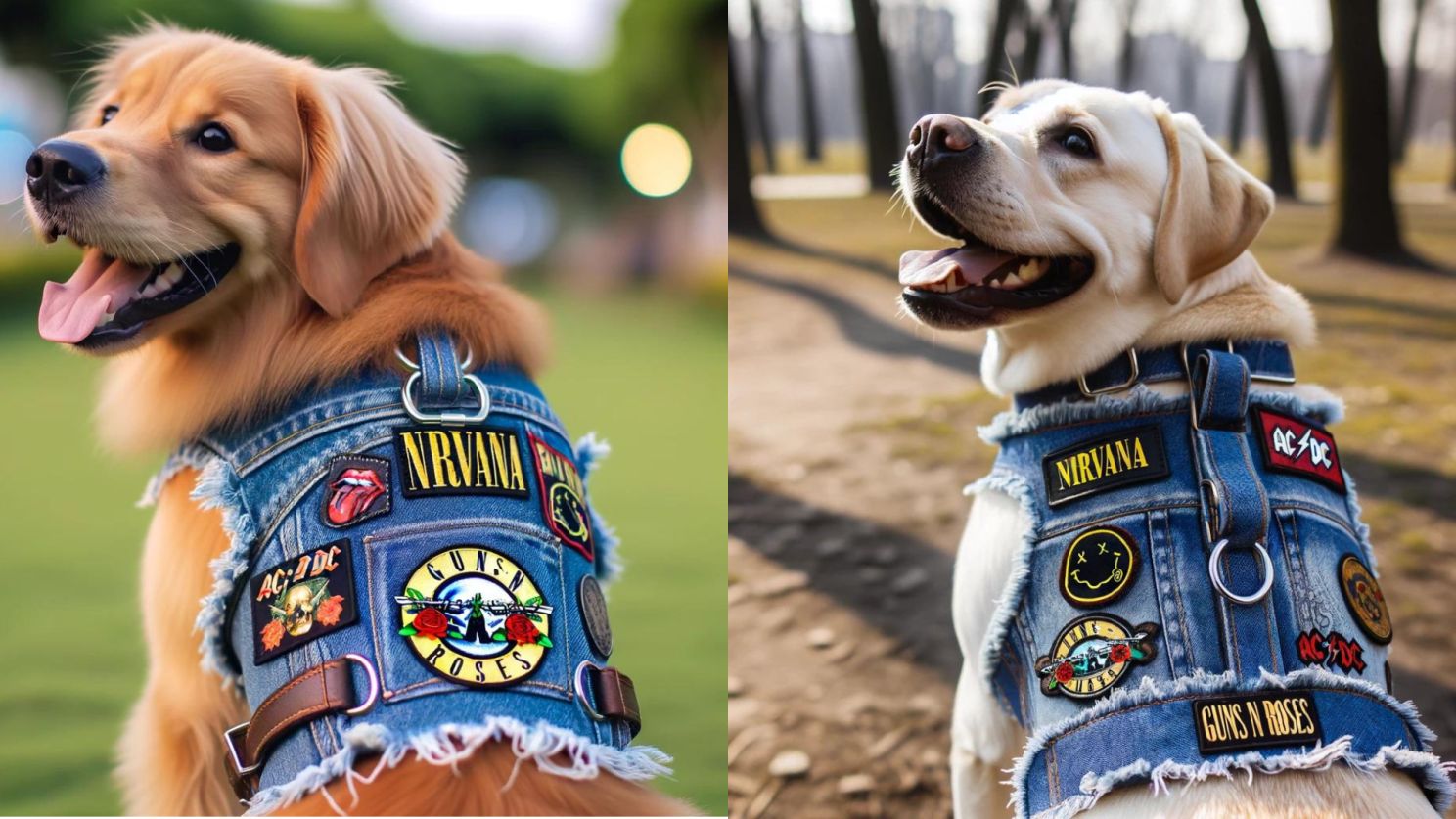
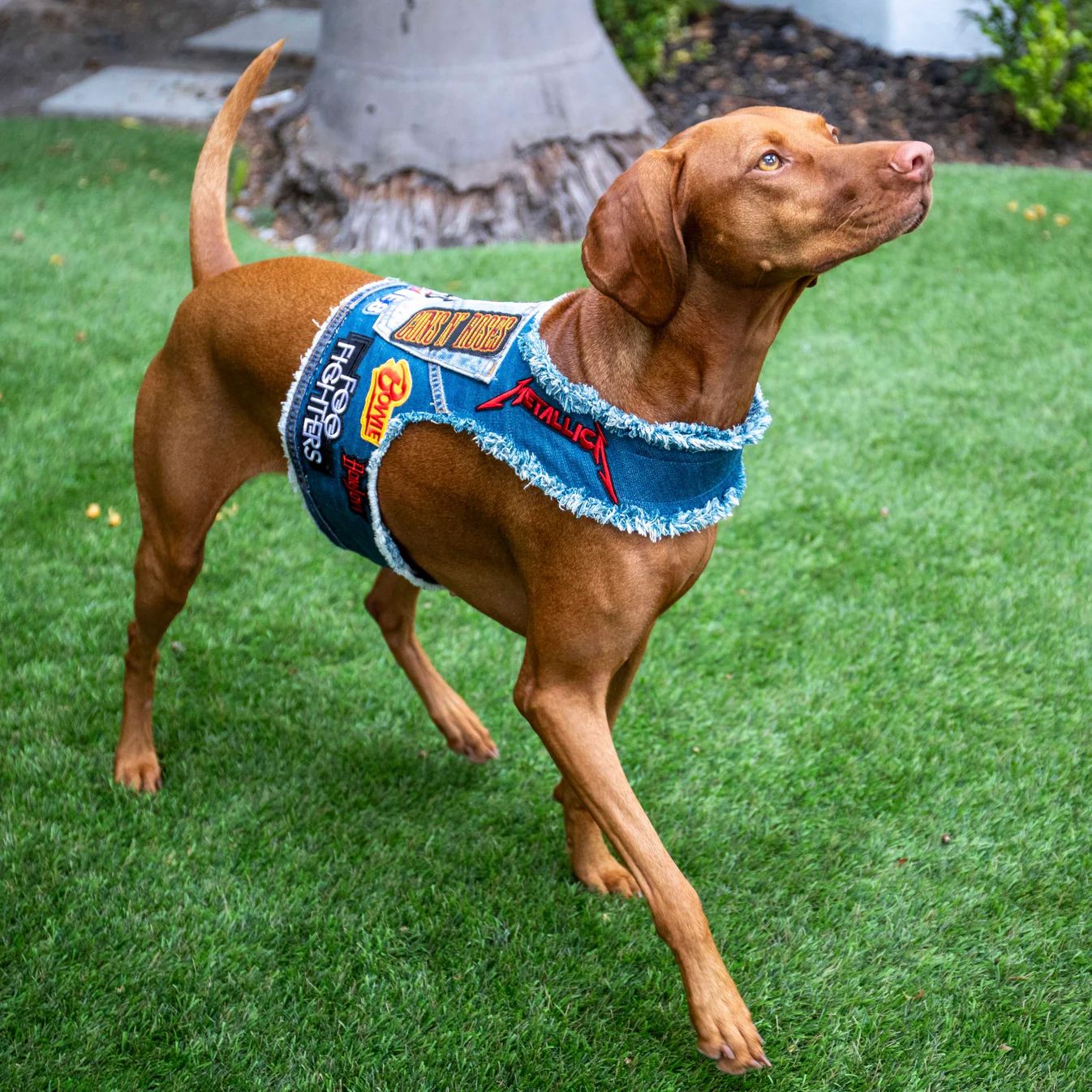
Aditya Chavan and his team used ChatGPT (with DALL-E) over 5 days to create AI-generated product images showing both the harness design AND the dog’s face from flattering angles.
Next, they scraped Amazon reviews of competing dog harnesses, used AI to analyze feedback, identified the top 4 customer priorities (perfect fit, escape-proof, breathable, aesthetics), and rewrote ad copy around these.
There was an unexpected discovery, too. New ads with AI-generated images got massive engagement but low conversions. Using Microsoft Clarity to track website behavior, they discovered why: the AI images looked better than the actual product. Customers felt misled when the real harness didn’t match the AI-generated promise.
Instead of abandoning AI images, the client redesigned the physical product to match what AI had shown customers wanted, creating the “Rocker 2.0” collection based on the AI-generated concept.
Source: headsortailspup.com
As a result, daily orders and revenue both doubled, while the product redesign based on AI insights successfully matched customer expectations.
Takeaway
You can research competitor reviews on Amazon or Google and use AI to spot common customer frustrations and wants. Then, create images that speak directly to those needs. Tools like ChatGPT, Midjourney, or DALL-E let you quickly generate and test product ideas—no need for costly photoshoots or large inventory upfront.
Create 10–20 image variations in just a few days, run them as ads, and use the results to see which ones your audience connects with most.
Recommendation
You can use a tool like Ahrefs’ Keywords Explorer to gauge actual user demand for specific product types and features. Enter seed keywords like “dog harness” and explore the “Matching terms” report. You can use the “Ecommerce” filter to narrow down results to actual products. This tells you which features have real demand, not just which ones get mentioned in reviews.
AI can replace expensive location shoots, but not product photography. Use AI to create background scenes. Photograph your product professionally, and use Photoshop to composite.
AGORA’s approach is best for: jewelry, accessories, packaged goods—any product needing premium presentation but flexible environments. Don’t use it for fashion on models or where product/environment interaction matters.
Ahrefs’ AI Content Helper to analyze top-ranking pages and maps which topics need coverage, eliminating the need to manually open dozens of tabs.
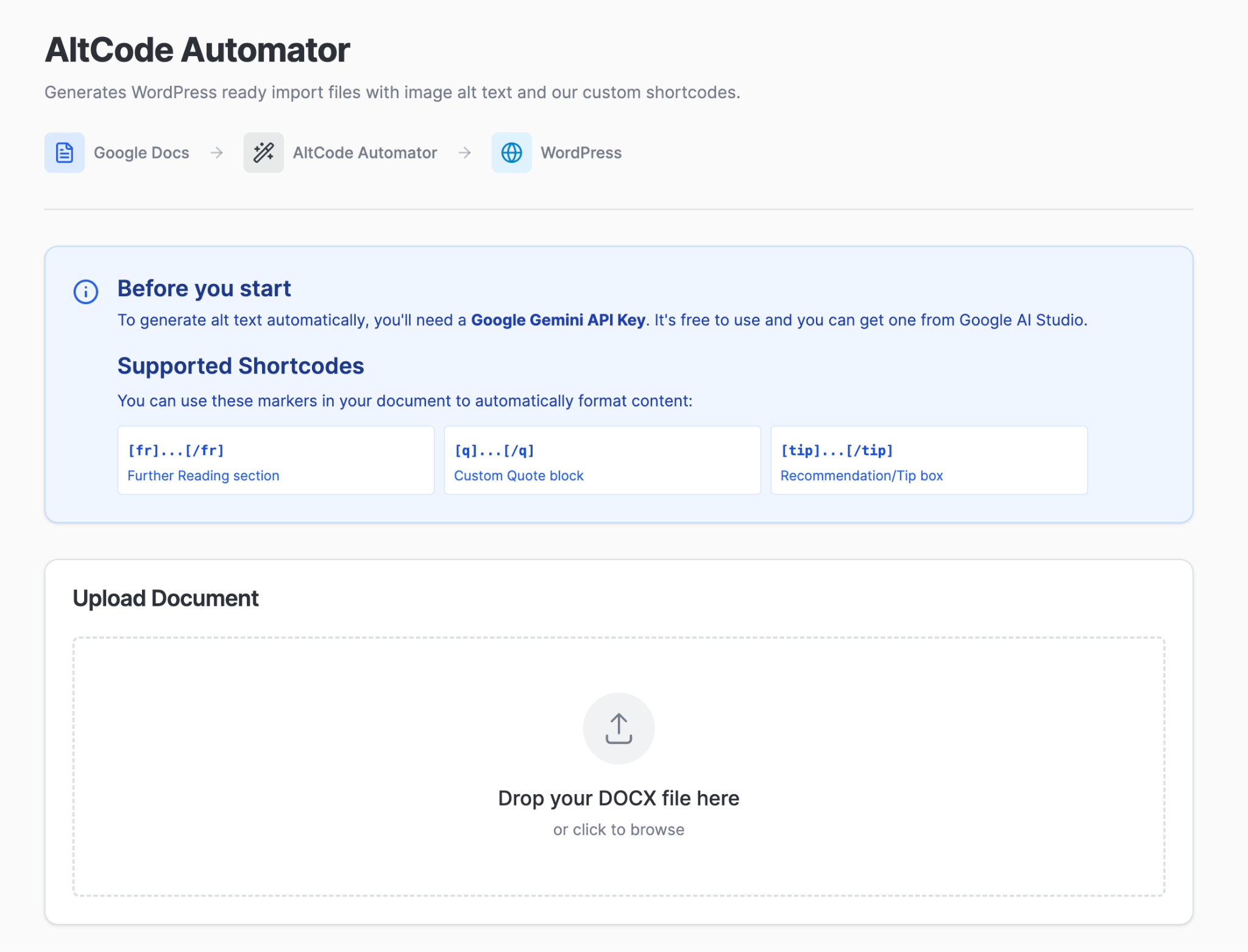
Recently, we started making our own vibe-coded internal tools. For example, I used Riff to make an app that inserts WordPress shortcodes and image alt text (via Gemini API). And to think I did all that manually…
Takeaway
Use AI to compress research time, automate formatting, and maintain consistency. Always have humans handle creative decisions, fact-checking, and preventing generic AI voice. This is how to use AI without sacrificing content quality.
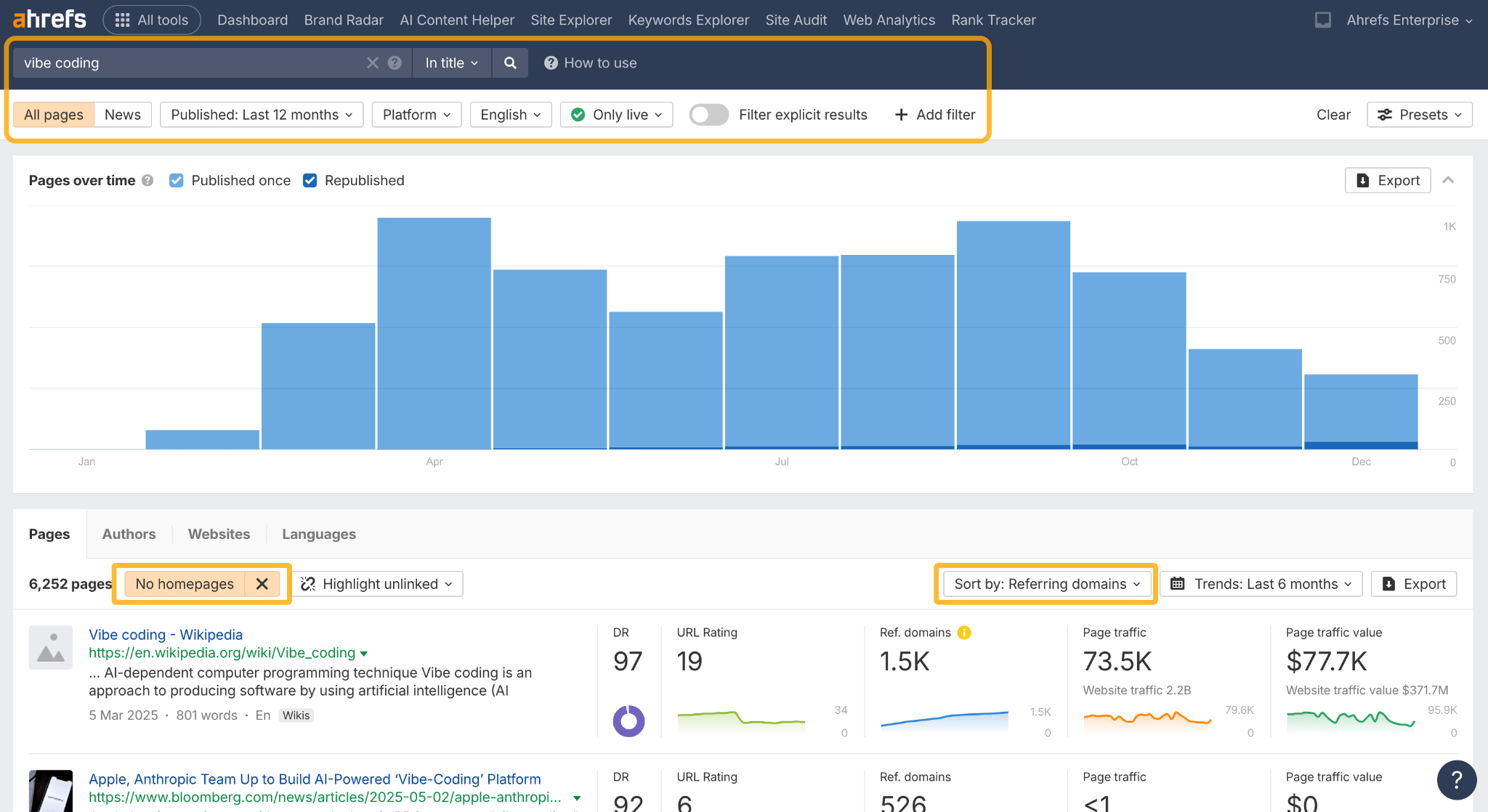
Ahrefs’ Content Explorer to find content people link to most often in your niche. Search your topic and sort by referring domains to see what naturally earns backlinks. Feed these top performers to your AI and ask it to identify what makes them link-worthy—the data, format, or angle. Then apply those insights to your content ideas.
In the example below, I’m looking for ideas on the topic of vibe coding in English, published this year, excluding homepages for better results and sorted by number of referring domains.
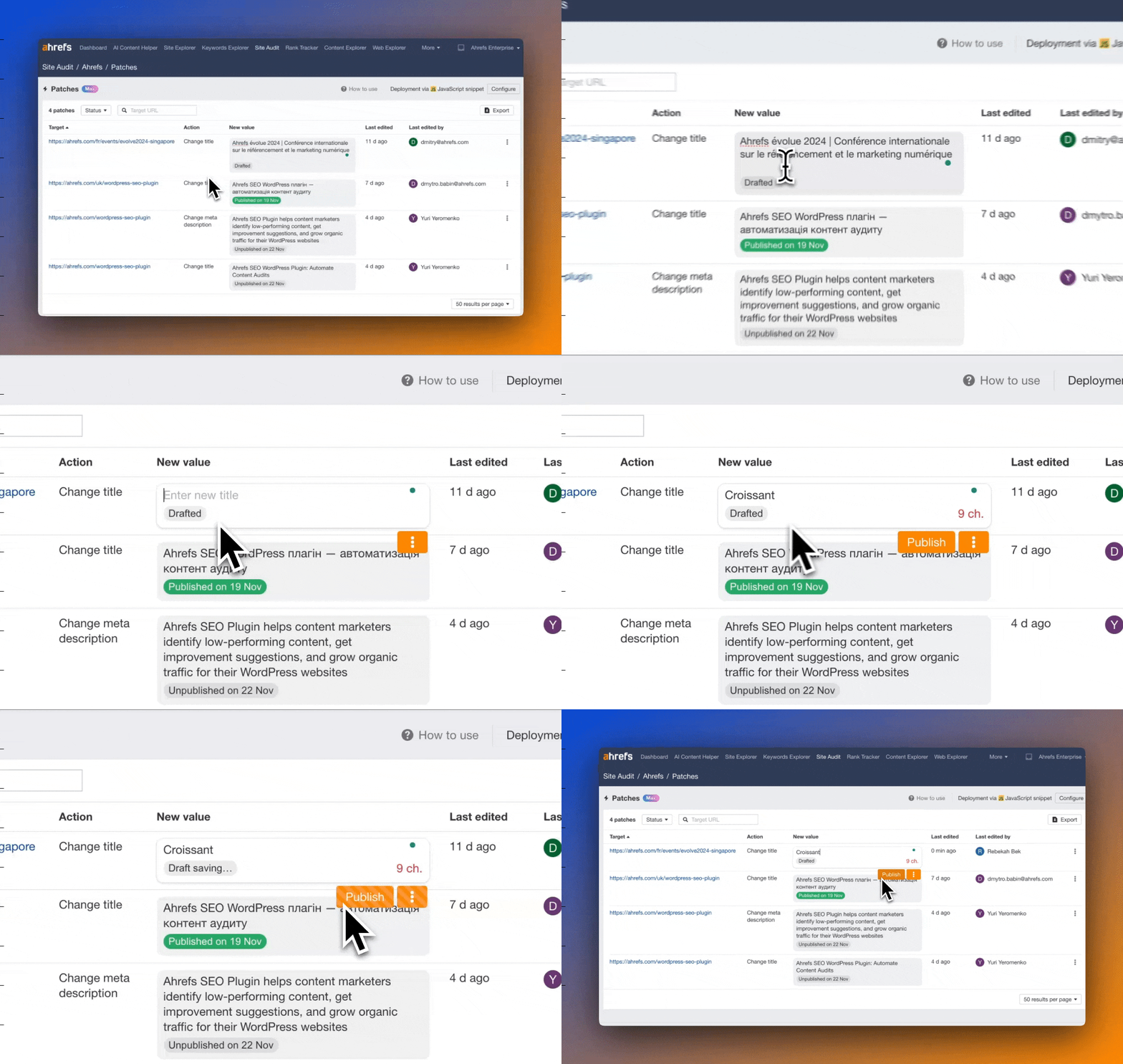
Patches lets you update hundreds or thousands of titles simultaneously using AI while maintaining your brand guidelines. You can test AI-optimized titles against your current ones, measure performance, and roll back changes if needed—exactly what Very Ireland did, but with far less manual work.